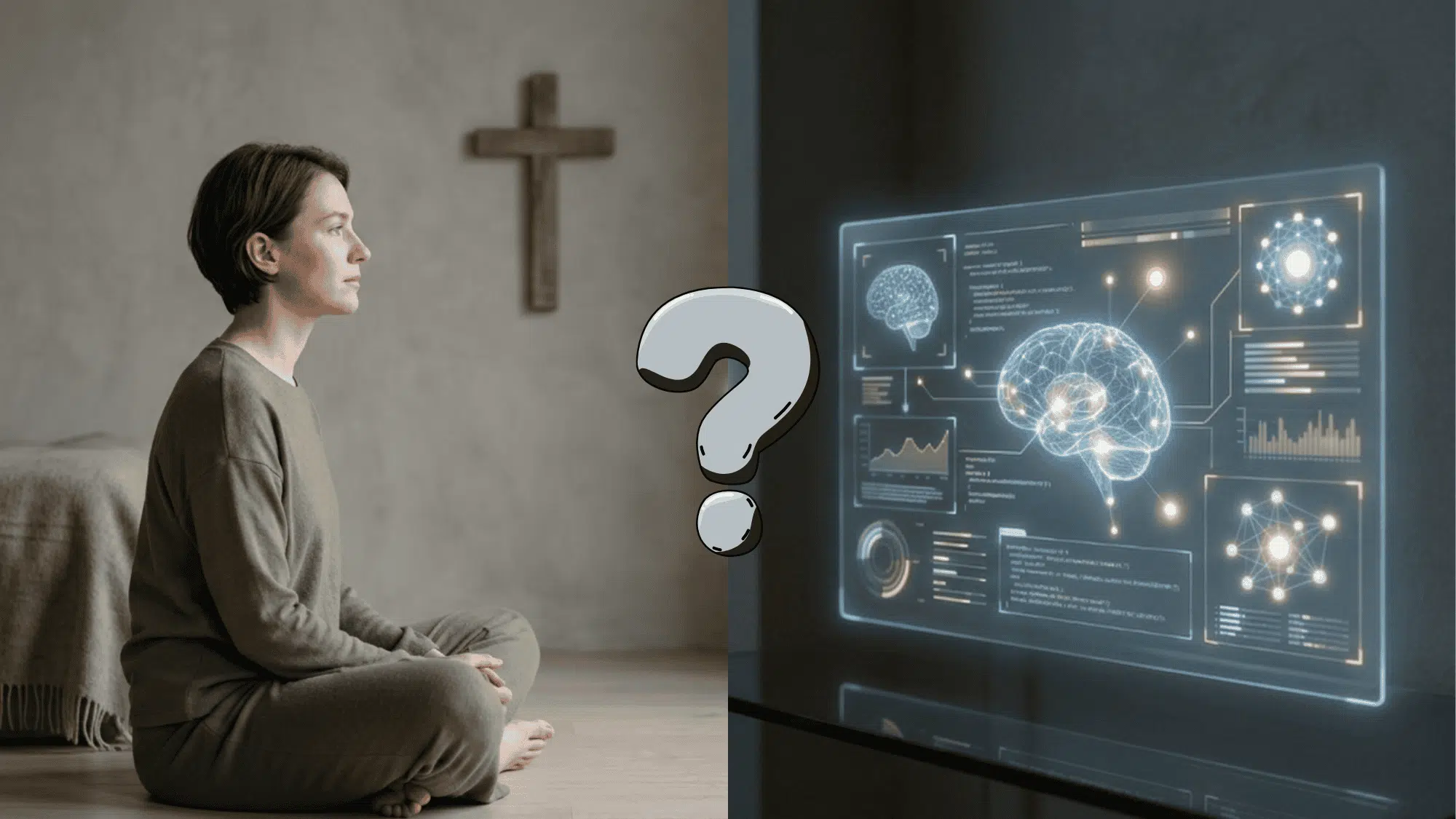



Artificial intelligence is everywhere now. It writes code, creates art, and even holds conversations that feel surprisingly human.
For most people, that’s progress. But for others, it raises a far older and deeper question: one rooted not in technology but in faith.
Some religious communities see AI as a sign of the end times. Others think that’s a stretch. And then there are those sitting somewhere in the middle, not sure what to believe.
So where does all this fear come from? Is it grounded in scripture, or is it just a story people tell themselves when change feels too fast? This blog looks at both sides of that question without any judgment.
Why are People Linking AI to the Antichrist Today?
Fear of the unknown has always pushed people toward big questions. And right now, AI is the biggest unknown of all.
It learns on its own, speaks like a human, and shows up in almost every part of daily life. For deeply religious communities, that kind of power starts to feel familiar, and not in a good way.
Old prophecies suddenly seem to match what’s happening in the world today.
That connection may not be logical to everyone, but for millions of people, it feels very real. And that feeling is worth taking seriously.
What is the Antichrist in Biblical and Religious Texts?

The Antichrist is one of the most talked-about figures in religious history. Here is what the texts actually say.
The Meaning of the Antichrist
The word “Antichrist” comes from the Greek word antichristos. It means “against Christ” or “in place of Christ.” It does not just refer to one evil figure.
In fact, the term shows up only a handful of times in the Bible; mostly in the letters of John. It describes anyone who denies that Jesus is the Christ.
Over centuries, though, the meaning grew bigger. People began using it to describe a powerful end-times figure who would rise up, deceive the world, and oppose God before the final judgment.
Common Verses That Suggest the Antichrist
A few key Bible passages shaped how people think about the Antichrist today.
- First John 2:18 warns that “many antichrists have come.”
- Second Thessalonians 2 speaks of a “man of lawlessness” who sets himself up as God.
- The Book of Revelation describes a beast given power over every nation.
- Daniel 7 talks of a horn that speaks against the Most High.
None of these passages use the exact word “Antichrist,” but readers have long connected them. Together, these verses built a picture of a deceptive, all-powerful figure arriving at the end of days.
Derivations Across Different Religions
The concept did not stay within Christianity alone. In Islam, a similar figure called Dajjal is said to appear before the Day of Judgment.
He is described as a one-eyed deceiver who spreads chaos across the earth.
In Jewish tradition, there is no direct equivalent, but the idea of a false leader who misleads people appears in various texts.
Even in some Hindu beliefs, a destructive force arrives before a new age begins. Each religion frames it differently, but the core fear is the same: a false power rises, and the world must choose a side.
What is Artificial Intelligence and How Does It Work?
Artificial intelligence is, at its core, a set of instructions that helps machines think and act like humans. It learns from data. It spots patterns. And over time, it gets better at the tasks it is given.
A simple example is when a streaming platform suggests a show based on what someone watched last week; that is AI at work.
When a phone recognizes a face to unlock the screen, that is AI too. It does not have feelings or a soul.
It does not make choices the way humans do. It simply processes information at a speed no human brain can match. That is powerful. But it is still just a tool: built, trained, and controlled by people.
Key Reasons Some Believe AI Could Be the Antichrist
The fear is not random. These are the specific reasons some religious communities draw that connection.
1. AI Speaks and Acts Like a Human: The Bible warns of a deceiver who mimics truth. AI holds conversations that feel shockingly real to many people.
2. It Has Global Reach and Influence: The Antichrist is said to hold power over all nations. AI already operates across every country without borders or limits.
3. AI Can Manipulate Information at Scale: Prophecy speaks of mass deception in the end times. AI can generate false content and spread it faster than anyone can stop.
4. It Operates Without a Moral Compass: Religious texts warn of a force that defies God’s law. AI makes decisions based solely on data, with no ethical grounding built in.
5. AI Could Enable a Global Control System: Revelation speaks of a mark needed to buy or sell. Some see AI-powered systems as a stepping stone toward that kind of total control.
6. It Challenges the Idea of Human Uniqueness: Faith traditions teach that humans are made in God’s image. AI blurring that line feels deeply threatening to many believers.
7. AI Inspires Worship-Like Devotion: Some people trust AI more than they trust other humans. That blind faith reminds certain religious thinkers of false idol worship.
Arguments Against AI Being the Antichrist
Not everyone agrees with the fear. Here are the strongest arguments that push back against that belief.
- AI is a Tool, Not a Being: The Antichrist is described as a living, breathing deceiver with intent. AI has no consciousness, no will, and no personal agenda of its own.
- Scripture Does Not Mention Technology: The Bible was written long before computers existed. Connecting ancient prophecy to modern technology requires a lot of reading between the lines.
- Fear Has Always Attached Itself to New Things: Every major invention, electricity, television, the internet, was once called evil by someone. AI is simply the latest target of that same old fear.
- AI cannot Make Moral Choices: The Antichrist is portrayed as a deliberate force of evil. AI does not choose anything; it only responds to the data and instructions it receives.
- Religious Scholars Largely Disagree With the Connection: Most theologians and Bible scholars do not support the idea that AI fits the biblical description of the Antichrist in any serious way.
Could AI Ever Become Dangerous in a Real-World Sense?
Putting religion aside for a moment, the question of whether AI poses a real danger is worth asking on its own. And the honest answer is yes, it could.
Not because AI is evil, but because powerful tools in the wrong hands cause serious harm.
Deep fake videos already mislead millions. AI-generated content floods the internet with false information. Hiring tools built on biased data make unfair decisions about real people’s lives.
These are not future fears; they are happening right now. The danger is not some supernatural force.
It is much simpler than that. It is human misuse of a technology that is growing faster than the rules meant to manage it.
To Conclude
AI is not the Antichrist. But the fear surrounding it points to something real: people are unsettled by how fast the world is changing. That discomfort deserves respect, not ridicule.
The smarter question is not whether AI fits an ancient prophecy. It is whether humanity uses this technology responsibly.
Religious or not, that concern belongs to everyone.
So instead of looking for signs of the end times, it is worth paying attention to what is happening right now and making sure the people building these systems are held accountable for what they create.