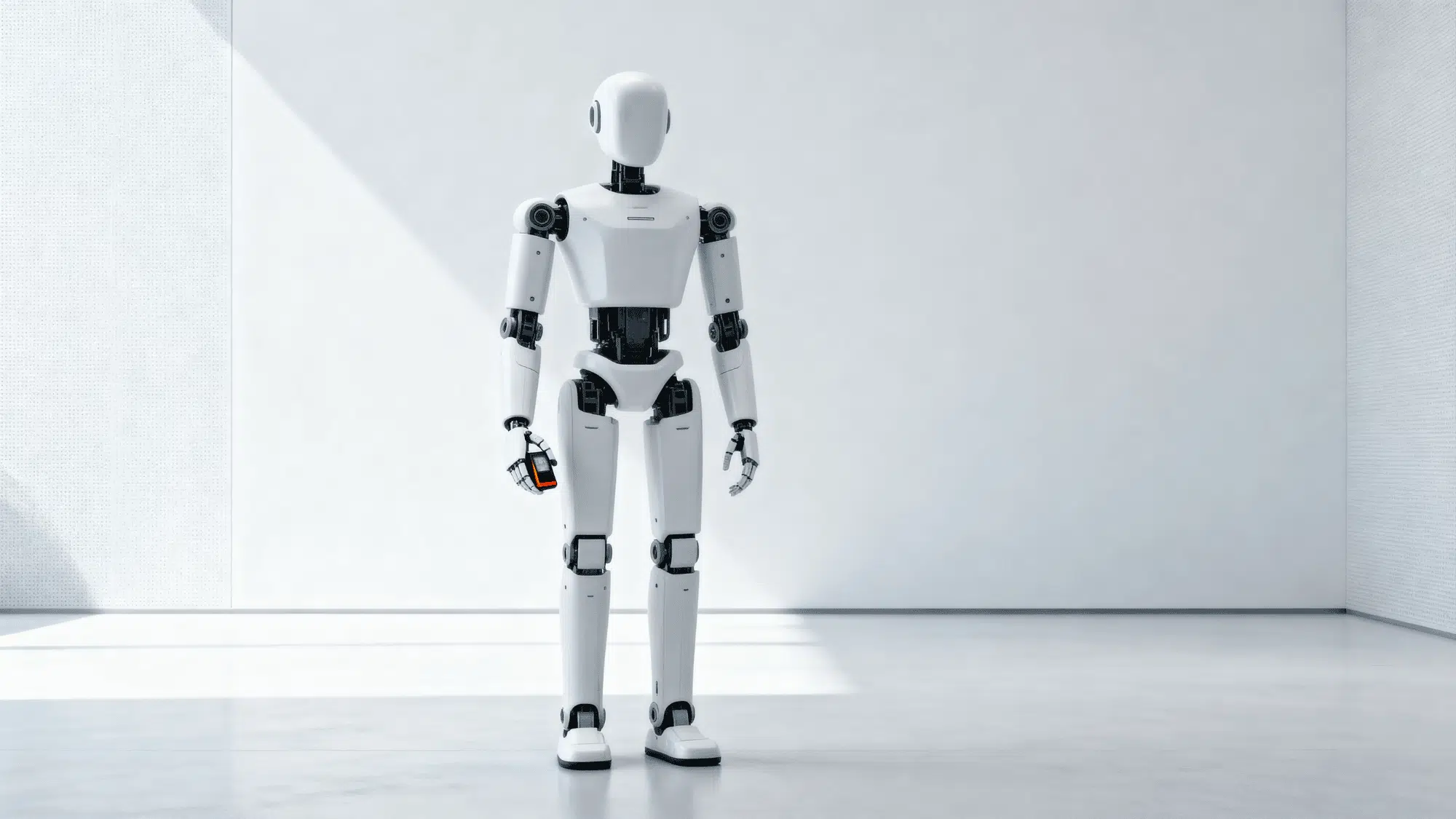



Humanoid robots are no longer something people only see in movies. They are real, they are here, and they are moving faster than anyone predicted.
Most people know robots exist. But keeping up with how quickly they are changing is a whole different story. Every few months, something new comes out, and it has been no different.
This year has brought some of the most talked-about changes in humanoid robot technology to date.
This blog breaks down the biggest breakthroughs: what changed, why it matters, and what it could mean going forward.
What is a Humanoid Robot?
A humanoid robot is a machine built to look and move like a human. It has a head, a torso, two arms, and two legs. These robots are designed to operate in spaces built for people, such as offices, homes, and factories.
But they are more than just human-shaped machines.
Modern humanoid robots can walk, pick up objects, and even respond to voice commands. Some can recognize faces and read body language too.
They are not perfect yet. But the technology behind them has come a long way. And in 2026, they are closer to real-world use than ever before.
Humanoid Robots Key Developments You Should Know

Humanoid robots are changing fast. Here are the key developments shaping their rise in 2026.
1. AI and Embodied Large Language Models
Humanoids now run on large language models that understand plain speech and learn from videos. This lets them follow simple commands like “clean the table” without needing task-specific code.
2. Rapid Hardware and Cost Reduction
Capable humanoid bodies have dropped from millions to under $100,000. Better actuators, lighter frames, and efficient joints now allow robots to walk, carry objects, and maintain balance like never before.
3. Real-World Deployments Beyond the Lab
Humanoids are showing up in warehouses and factories. Companies like Tesla and 1X are testing them for pick-and-place tasks and repetitive assembly work under human supervision.
4. Advances in Dexterity and Mobility
Robots can now open doors, handle tools, and recover from stumbles. AI-driven imitation learning enables them to copy human movements directly from videos or live demonstrations with increasing accuracy.
5. Human-Like Interaction and Social Roles
Humanoids are being tested in retail, healthcare, and hospitality. They can guide customers, support elderly care, and respond to voice and gestures, though this area is still developing.
6. Rising Investment and Economic Forecasts
Tens of billions of dollars are flowing into humanoid startups. Analysts project that millions of units will be deployed by 2050, especially in countries facing labor shortages and aging populations.
7. Safety, Regulation, and Ethics Concerns
As humanoids enter public spaces, debates around safety, privacy, and job displacement are growing. Policy-by-design is becoming a key focus to make sure deployment stays responsible and fair.
How Humanoid Robots are Being Used in Real Industries
Humanoid robots are stepping into real work environments. Here is where they are making the biggest impact today.
- Manufacturing and Assembly: Robots handle repetitive tasks like screwing, sorting, and part placement on factory floors with growing precision.
- Warehousing and Logistics: Humanoids pick, pack, and move goods in warehouses, reducing strain on human workers during high-demand periods.
- Healthcare and Elder Care: Robots assist with patient monitoring, mobility support, and companionship for elderly individuals in care facilities.
- Retail and Hospitality: Humanoids greet customers, answer basic questions, and guide visitors through stores, hotels, and public spaces.
- Construction and Inspection: Robots carry materials, check structures, and operate in high-risk zones where human safety is a concern.
- Home Assistance: Some humanoids are being tested for household tasks like cleaning, fetching items, and supporting people with disabilities.
- Telepresence and Remote Work: Humanoids act as physical stand-ins for workers, allowing people to operate them remotely from a different location.
Current Challenges in Humanoid Robot Development
Humanoid robots have come a long way. But several real challenges still stand between them and widespread use.
- High Production Costs: Building a capable humanoid robot still costs tens of thousands of dollars, making mass adoption difficult for most businesses.
- Limited Battery Life: Most humanoids can only operate for a few hours before needing a recharge, limiting their practical use in long shifts.
- Dexterity and Fine Motor Skills: Robots still struggle with delicate hand movements like threading, folding, or handling fragile objects without causing damage.
- Adapting to Unstructured Environments: Humanoids perform well in controlled settings but often fail in cluttered, unpredictable, or constantly changing real-world environments.
- Safety Around Humans: Operating alongside people requires extremely precise sensors and responses. Any error in judgment could lead to serious physical harm.
- Regulation and Legal Accountability: There are still no clear global standards for the use of humanoid robots, leaving companies and governments uncertain about liability and oversight.
Why Humanoid Robots are Gaining Momentum?

Several things have come together in 2026 to push humanoid robots from an interesting concept to a serious technology.
First, AI has gotten much better. Robots can now understand spoken instructions and learn from watching humans. That alone has changed what they can do on the job.
Second, the cost of building them has dropped significantly. More companies can now afford to test and deploy them at a smaller scale.
Third, labor shortages in manufacturing, healthcare, and logistics have created real demand. Businesses are looking for reliable solutions, and humanoid robots are stepping in at the right time.
On top of that, investor confidence is at an all-time high. Funding is flowing into humanoid startups faster than ever before. And as more real-world pilots show results, the momentum only keeps building.
Future of Humanoid Robots Outlook
The future of humanoid robots looks promising. Here is what the coming years could realistically bring to the table.
- Wider Workplace Adoption: More industries will bring humanoids into daily operations, handling tasks that are repetitive, dangerous, or physically demanding for humans.
- Smarter AI Integration: Future humanoids will process complex instructions faster and make better decisions in real time across varied environments and situations.
- Lower Costs and Broader Access: As production scales up, prices will drop further, making humanoid robots accessible to mid-sized businesses and not just large corporations.
- Stronger Safety Standards: Governments and regulatory bodies will likely roll out clearer guidelines, making humanoid deployment in public and workplaces safer and more structured.
- Greater Human-Robot Collaboration: Rather than replacing workers entirely, humanoids will work alongside people, taking on supporting roles that boost overall productivity and reduce physical strain.
- Expansion into Developing Markets: As costs fall and technology matures, humanoid robots could start appearing in emerging economies, addressing local labor gaps and boosting industrial growth.
Will Humanoid Robots Replace Human Jobs?
Humanoid robots are getting better at physical tasks. They can sort, carry, assemble, and even assist in healthcare settings.
So it is natural for people to wonder what that means for human workers.
But most experts do not see a full replacement happening anytime soon. Robots still struggle with judgment, creativity, and handling truly unpredictable situations. Those are areas where humans hold a clear edge.
What is more likely is a shift in roles. Some jobs will change. Others will disappear. But new kinds of work will also emerge around building, maintaining, and supervising these machines.
The bigger concern is not the replacement overnight. It is making sure the transition happens in a way that is fair and gives workers time to adapt.
To Conclude
Humanoid robots are no longer a general idea. They are already working in factories, care homes, and retail spaces, and this year has made that clearer than ever.
The technology is still maturing. Costs are dropping, AI is improving, and real-world pilots are showing genuine results. But challenges around safety, regulation, and workforce impact still need serious attention.
The road ahead will not be without bumps. However, one thing is certain: humanoid robots are here to stay, and their role in daily life will only grow stronger.
The question now is not if they will change the world. It is how ready the world is for that change.