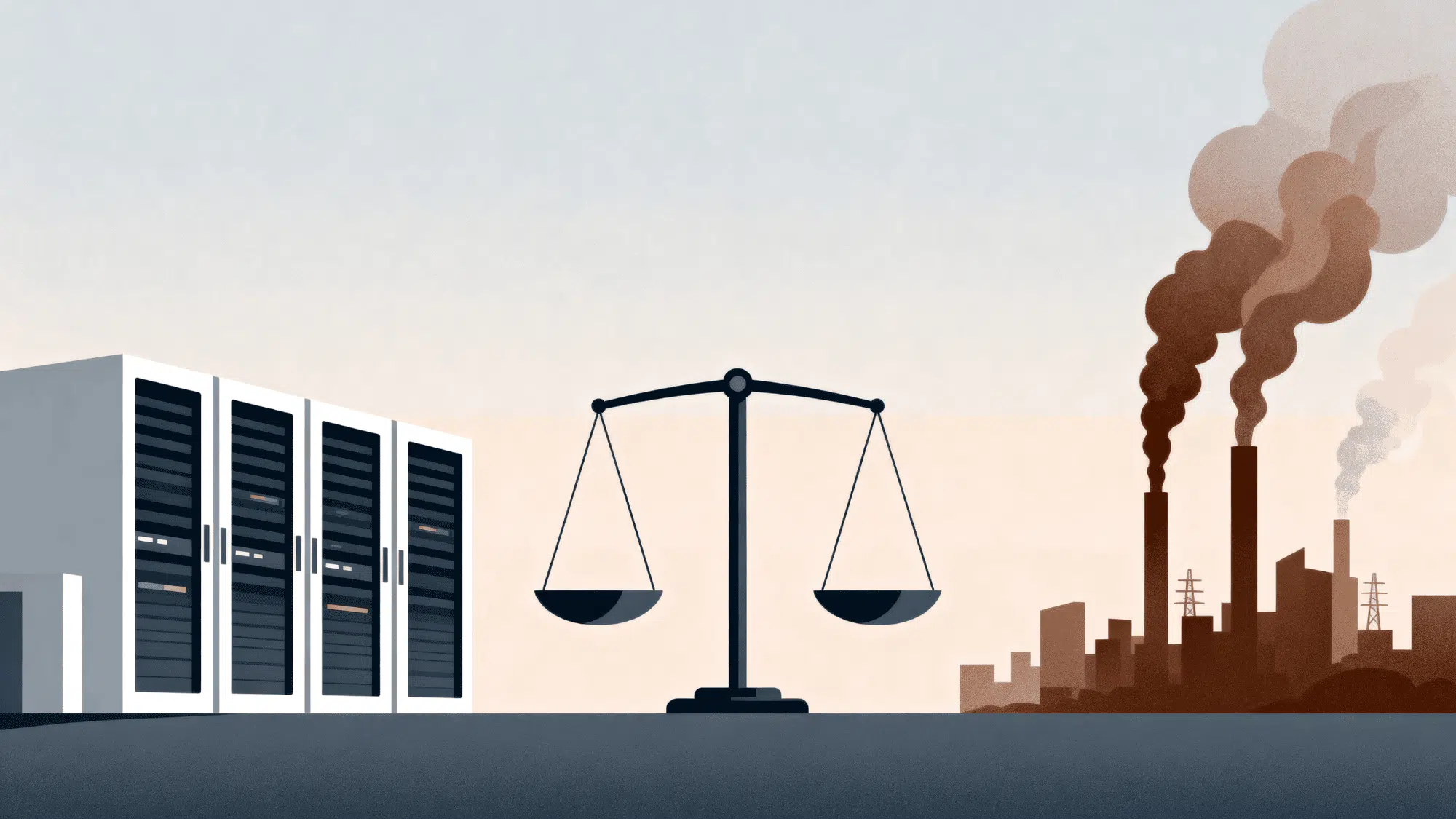



Data centers power everything: emails, streaming, cloud storage, and online banking. Every click, every upload, every search runs through one. And the world keeps adding more of them.
But as digital life grows, so do the questions. These massive facilities run 24/7. They need huge amounts of electricity and water just to keep going.
So are data centers actually bad for the environment?
There’s a lot going on behind the scenes, from energy use and carbon emissions to the steps tech companies are taking right now.
How Much Do Data Centers Impact the Environment Globally
Data centers have a bigger environmental footprint than most people think.
Right now, they account for about 1–1.5% of global greenhouse gas emissions and nearly 1% of total global electricity demand. That may sound small, but the numbers behind it are hard to ignore.
Global data center electricity use hit around 460 TWh per year in 2024, producing roughly 180–185 million tons of CO₂-equivalent emissions, comparable to the annual electricity consumption of a country like Britain.
And things are moving fast. As AI workloads and cloud computing keep growing, some projections suggest data center emissions could reach up to 40% of current total U.S. emissions by 2030.
The environmental weight of these facilities is no longer a small footnote; it is a real and growing concern.
Key Environmental Concerns of Why Are Data Centers Bad

Data centers keep the digital world running, but they come with real environmental costs that are hard to ignore.
1. High Energy Consumption
Data centers use enormous amounts of electricity to keep servers running around the clock. In fact, they account for nearly 1-2% of global electricity use.
Most of that power still comes from fossil fuels. The more data the world generates, the more energy these facilities pull from the grid, and that number keeps climbing.
2. Water Usage and Strain on Local Supplies
Cooling systems inside data centers rely heavily on water.
A single large facility can use millions of gallons every year. This puts real pressure on local water supplies, especially in regions already dealing with water shortages.
During hot weather, cooling demands spike even further, making the problem worse.
3. Carbon Emissions
When data centers run on coal or gas-powered electricity, they release carbon dioxide into the atmosphere. This adds to the broader problem of climate change.
Some estimates put the tech industry’s carbon footprint on par with the aviation sector. That’s a significant environmental impact for an industry that’s still growing fast.
4. Electronic Waste
Servers and hardware don’t last forever. Data centers regularly replace outdated equipment, and that creates mountains of electronic waste.
Much of this e-waste ends up in landfills. Toxic materials like lead and mercury can leak into the soil and water, causing long-term damage to the environment.
5. Land Use and Habitat Disruption
Building new data centers requires large plots of land. This often means clearing natural habitats or taking over green spaces.
In some areas, local communities and environmentalists have pushed back against new construction. The physical footprint of these facilities isn’t something that gets talked about enough.
The Benefits of Data Centers You Should Know
Data centers do more good than most people realize. Here are some benefits that often get overlooked.
- They Power the Digital Economy: From online banking to e-commerce, data centers keep critical digital services running smoothly every single day.
- They Support Remote Work: Millions of people work from home because data centers store and deliver the tools that enable it.
- They Improve Business Efficiency: Companies store and access data faster, reducing paperwork, physical storage, and overall operational costs.
- They Enable Smart Technologies: Artificial intelligence, machine learning, and automation all depend on data centers to process and store large amounts of information.
- They Reduce the Need for Physical Infrastructure: One data center can replace hundreds of on-site servers, lowering the total energy footprint across many businesses.
- They Drive Job Creation: Building and running data centers creates thousands of jobs in construction, engineering, cybersecurity, and tech operations.
What are Companies Doing to Make Data Centers More Sustainable?

Many companies are taking real steps to cut the environmental impact of their data centers. Here’s what’s changing.
1. Switching to Renewable Energy Sources: Major tech companies are signing long-term deals to power their data centers entirely with solar and wind energy.
2. Using Advanced Cooling Technologies: Liquid cooling and air-side cooling systems are replacing traditional methods, cutting water and energy use by significant margins.
3. Building Energy-Efficient Hardware: Companies are designing servers and storage systems that deliver more computing power while consuming far less electricity than older equipment.
4. Adopting Circular Economy Practices: Businesses are refurbishing and reusing old servers instead of discarding them, reducing e-waste and demand for rare-earth materials.
5. Choosing Smarter Server Locations: Some companies are placing data centers in cooler climates, using natural air to reduce the energy needed for cooling.
6. Investing in Carbon Offset Programs: Several large tech firms are funding reforestation and clean energy projects to balance out the emissions their data centers still produce.
7. Improving Power Usage Effectiveness (PUE): Companies are tracking and improving PUE scores to make sure more power goes to computing rather than cooling and lighting.
How Can Data Centers Become More Environmentally Friendly
Making data centers more environmentally friendly goes beyond just switching to solar panels. The real shift happens when the entire system, from design to daily operations, gets rethought.
Smarter building designs that allow natural ventilation can cut energy use before a server even powers on.
Sharing infrastructure across multiple organizations instead of building separate facilities reduces the total number of data centers needed globally. Governments and regulators also play a big role here.
Stronger policies around energy reporting, emission targets, and construction standards can push the entire industry in the right direction.
On top of that, training staff to follow energy-saving practices day-to-day makes a real difference over time. Small operational changes, when applied at scale, can add up to something significant.
The Future of Data Centers: Problem or Sustainable Solution?
The future of data centers sits at a crossroads. On one hand, demand for digital services, AI, and cloud computing is not slowing down anytime soon.
On the other hand, the technology and practices needed to run these facilities cleanly are improving faster than ever before.
Modular data centers, smaller, portable units that scale on demand, are gaining ground as a smarter alternative to massive fixed campuses.
Edge computing is also shifting the way data gets processed, bringing it closer to the end user and reducing the load on large centralized facilities.
The question is not really whether data centers will exist in the future. It is whether the industry moves fast enough to keep its growth from outpacing the progress being made on sustainability.
Conclusion
Data centers are not simply a problem to be solved; they are a permanent part of modern life. The real question is how responsibly the industry manages its growth.
Energy consumption, water use, and e-waste are serious concerns, but workable solutions already exist.
Smarter designs, cleaner energy sources, stronger regulations, and better operational habits can all move the needle in the right direction. The next decade will be critical.
If businesses, governments, and tech companies act with intention, data centers can shift from being an environmental liability to a model of responsible digital infrastructure. The technology is there; what matters now is the will to use it.